
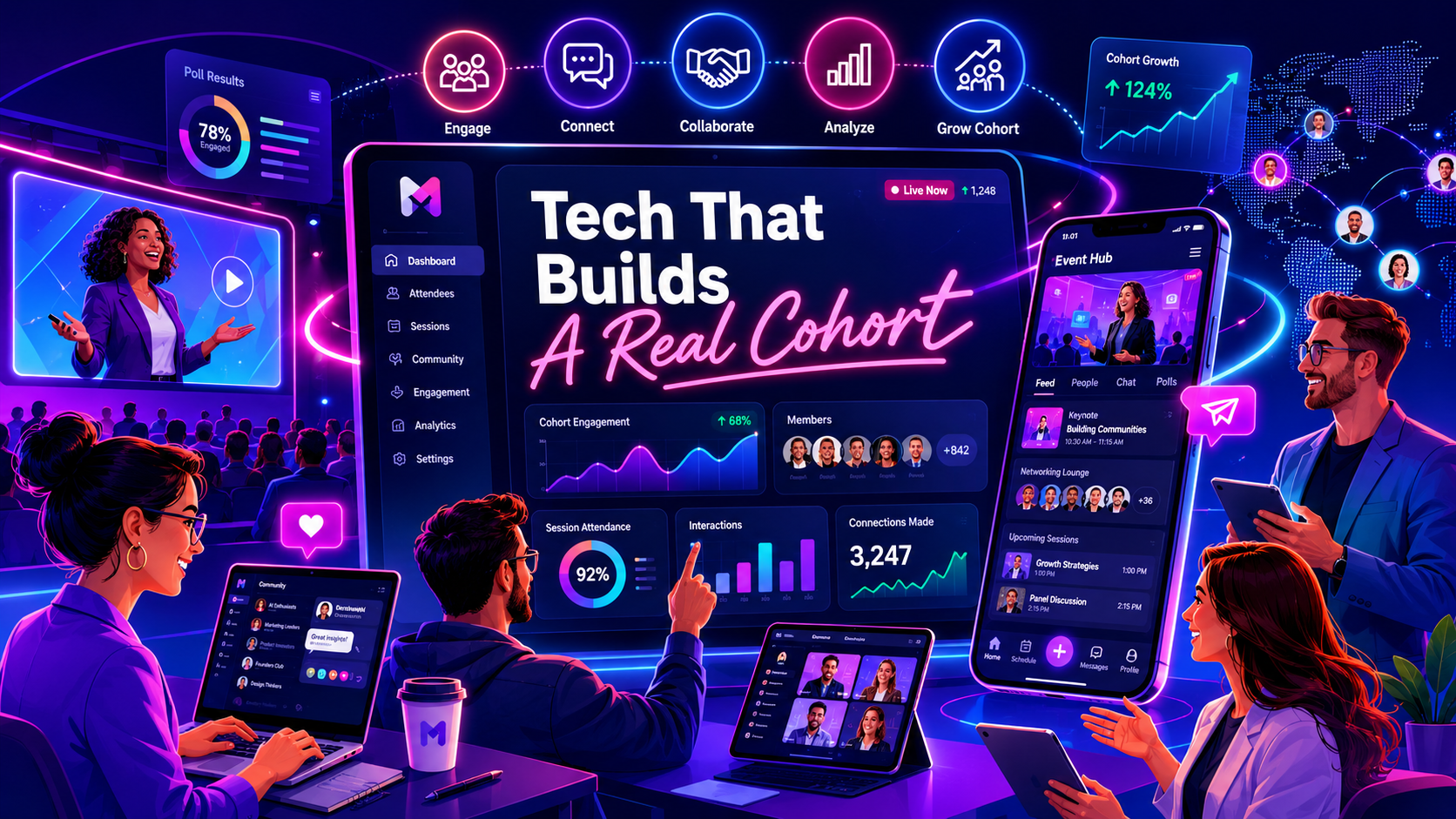
Running a successful mastermind is about far more than organising calls and sharing content.
The most effective masterminds create genuine connections between members. They foster accountability, encourage collaboration, and build relationships that continue long after individual sessions have ended. While expertise, facilitation, and structure all play important roles, technology can have a significant impact on whether a mastermind becomes a true community or simply a collection of participants attending meetings.
Many hosts discover that creating a real cohort requires more than a video conferencing link and a messaging group. Members need opportunities to connect, engage, share experiences, and support one another throughout their journey.
At Expo Social, we understand the importance of community-driven engagement. Building meaningful connections between people is at the heart of what successful communities achieve, and the right technology can help create an environment where those relationships can flourish. Online community platforms have become increasingly important because they allow organisers to maintain engagement, networking, and communication throughout the year rather than limiting interaction to individual events or sessions.
What Makes A Cohort Different From An Audience?
One of the biggest mistakes mastermind hosts make is treating participants like an audience rather than a cohort.
An audience consumes information. A cohort interacts, collaborates, and learns together.
True mastermind groups are built around shared goals, peer-to-peer support, and collective problem-solving. The concept of a mastermind group centres on people providing advice, support, accountability, and feedback to help one another achieve common objectives.
Technology should therefore be chosen not simply for content delivery but for its ability to facilitate meaningful interaction between members.
Community Must Continue Between Sessions
Many mastermind groups begin with strong energy but lose momentum between meetings.
If members only interact during scheduled sessions, opportunities for connection can be limited. Questions go unanswered, accountability weakens, and relationships may never develop beyond occasional conversations.
Community platforms have emerged as a way to extend engagement beyond individual events, allowing participants to communicate, network, and interact throughout the year.
For mastermind hosts, this means selecting technology that keeps conversations active between sessions rather than relying solely on scheduled meetings.
Why Dedicated Community Spaces Matter
Many organisers initially use social media groups to host mastermind discussions.
While familiar, social media platforms often create distractions and make it difficult to maintain focused conversations. Dedicated community platforms offer greater control over member interactions, content organisation, privacy, and engagement. They are specifically designed to support deeper interactions and meaningful member discussions rather than competing with endless external content.
For hosts looking to build a strong cohort experience, creating a dedicated environment can help members feel more invested in the community itself.
The Importance Of Member Visibility
People are far more likely to engage when they know who else is in the room.
A strong cohort experience allows members to understand one another’s backgrounds, goals, expertise, and challenges. When members can easily identify common interests and complementary skills, meaningful conversations become more likely.
Technology that enables member profiles, introductions, and ongoing visibility can help transform a collection of strangers into a connected community.
This visibility often becomes the foundation upon which stronger professional and personal relationships are built.
Live Interaction Remains Essential
While asynchronous communication is valuable, live interaction remains an important component of successful mastermind groups.
Community-building platforms increasingly include live event functionality because face-to-face interaction helps strengthen relationships and encourages more active participation. Features that support live meetings, events, and interactive discussions can contribute significantly to member engagement.
For mastermind hosts, live sessions provide opportunities for problem-solving, accountability, coaching, and relationship-building that are difficult to replicate through written communication alone.
Content Should Support Community, Not Replace It
Many mastermind hosts focus heavily on delivering resources, templates, training materials, and educational content.
While valuable, content alone rarely creates a true cohort.
Successful mastermind groups use content as a catalyst for discussion, collaboration, and implementation. Community platforms often include content libraries and resource areas, but their real value comes from creating opportunities for members to engage with one another around that content.
The strongest communities encourage members to share experiences, ask questions, and support each other’s progress rather than simply consuming information.
Accountability Is Easier With The Right Technology
Accountability is one of the defining features of many successful mastermind programmes.
Members often join because they want support, encouragement, and a framework for achieving specific goals. Technology that facilitates regular check-ins, progress tracking, and ongoing communication can help strengthen accountability throughout the programme.
Some community platforms include tools specifically designed to help members track progress, manage goals, and remain engaged with the wider group.
These features can help transform good intentions into meaningful action.
Reducing Fragmentation Improves Engagement
One common challenge for mastermind hosts is managing multiple disconnected tools.
When meetings take place in one platform, discussions happen elsewhere, resources are stored somewhere else, and announcements are distributed through separate channels, members can become disengaged.
Community experts increasingly recommend consolidated platforms that bring discussions, events, resources, and member interactions together in one place. Using multiple disconnected systems can increase complexity and make it harder for communities to function effectively.
Creating a single, centralised experience often helps members engage more consistently.
Mobile Access Supports Participation
Today’s communities are increasingly mobile.
Members want to engage while travelling, between meetings, or during breaks in their day. Platforms that provide strong mobile experiences make it easier for participants to remain involved and contribute regularly.
Community technology that supports mobile access can help ensure conversations continue naturally rather than being restricted to desktop sessions. This flexibility can be particularly important for busy professionals participating in mastermind programmes.
Creating A Sense Of Belonging
The strongest cohorts are built around more than information exchange.
Members remain engaged when they feel part of something meaningful. They want to feel recognised, supported, and connected to other members.
Community-building technology can help create this sense of belonging by making interactions more visible, facilitating introductions, encouraging participation, and providing opportunities for members to support one another. Dedicated community environments are often more effective at fostering long-term relationships than traditional social media spaces because they are designed specifically around member interaction and engagement.
The result is a stronger and more resilient community.
Technology Should Support Human Connection
Perhaps the most important principle for mastermind hosts is remembering that technology is not the goal.
The goal is human connection.
Platforms, tools, and features should be evaluated based on how effectively they help members communicate, collaborate, and build relationships. The most successful community technologies are those that make meaningful interactions easier rather than adding complexity.
Technology works best when it fades into the background and allows relationships to take centre stage.
How Expo Social Can Help
At Expo Social, we recognise that successful communities are built on engagement, connection, and meaningful interactions. Community technology should help bring people together, facilitate conversations, and create opportunities for collaboration rather than simply delivering information.
By focusing on member engagement and relationship-building, hosts can create mastermind experiences that feel like genuine cohorts rather than passive audiences.
Conclusion
Building a real cohort requires more than scheduling meetings and sharing resources. Successful mastermind groups create environments where members connect, support one another, exchange ideas, and remain engaged throughout their journey.
The right technology helps make this possible by supporting ongoing communication, accountability, live interaction, resource sharing, and community-building. Dedicated community platforms can provide the structure needed to maintain engagement long after individual sessions have ended.
For mastermind hosts, the ultimate goal should always be the same: creating meaningful connections that help members achieve more together than they could alone.
Leave a Reply