
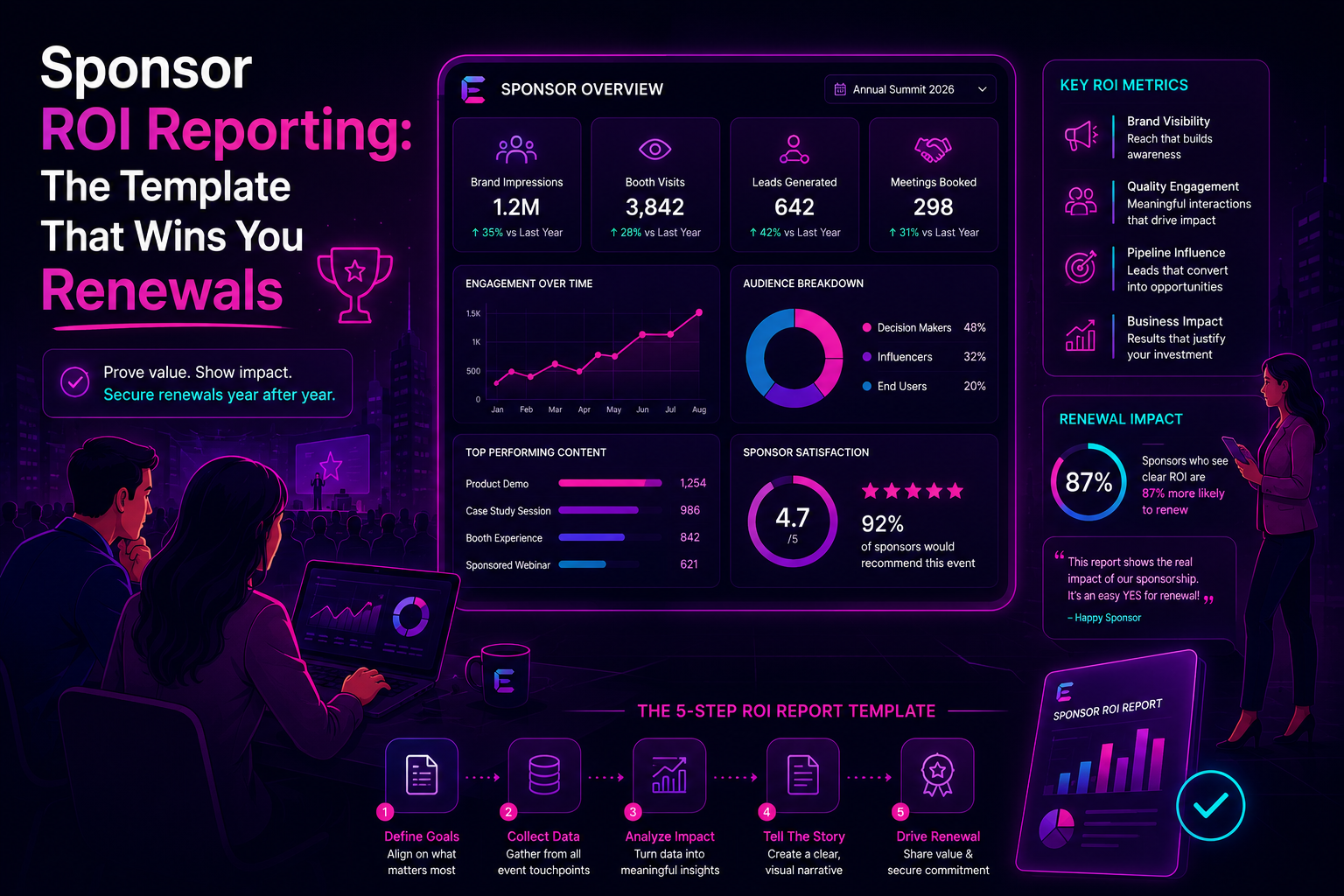
Securing event sponsors is only part of the sponsorship journey. The real challenge often begins after the event has ended.
Sponsors invest in events because they expect value in return. That value may come in the form of brand exposure, lead generation, audience engagement, networking opportunities, or a combination of several objectives. Once the event is over, sponsors want to understand whether those objectives were achieved and whether their investment delivered meaningful results.
This is where sponsor ROI reporting becomes essential.
At Expo Social, we understand that sponsorship success is built on more than simply delivering branding opportunities. Long-term sponsor relationships are often strengthened by clear communication, measurable outcomes, and reporting that demonstrates the value generated through participation. Effective sponsor reporting helps sponsors understand what was achieved and provides a strong foundation for future renewals.
Why Sponsor ROI Reporting Matters
Many event organisers focus heavily on securing sponsorship agreements but devote far less attention to post-event reporting.
Unfortunately, this can create uncertainty for sponsors. While they may have enjoyed participating in the event, they still need evidence that supports their investment decisions. Sponsors increasingly expect measurable outcomes rather than simply visibility or attendance numbers. They want to understand how attendees engaged with their brand and whether those interactions supported their business objectives.
Without clear reporting, even successful sponsorship activations can be difficult to evaluate.
Strong ROI reporting helps remove that uncertainty and gives sponsors confidence in the value they received.
Sponsors Need More Than Attendance Numbers
One common mistake in sponsorship reporting is relying solely on headline event statistics.
While overall attendance figures may provide useful context, they rarely answer the questions sponsors care about most. Modern sponsors are increasingly interested in engagement quality, audience relevance, lead generation, and measurable interactions rather than simple exposure metrics.
For example, a sponsor may be far more interested in understanding how many relevant prospects engaged with their activation than knowing the total number of attendees at the event.
Effective reporting focuses on outcomes that align with sponsor objectives.
The Link Between Reporting And Renewals
Sponsor renewals are often influenced by how clearly value is communicated.
Industry guidance consistently highlights that sponsors are more likely to renew when they can clearly see the impact of their investment and understand the results achieved. Organisers who provide structured, data-backed reporting are often better positioned to build long-term sponsorship relationships.
Reporting is therefore not simply an administrative task. It is a valuable relationship-building tool.
When sponsors receive clear evidence of success, conversations about future partnerships become significantly easier.
What Makes A Strong Sponsor ROI Report?
A successful sponsor report should be clear, relevant, and focused on outcomes.
Industry best practice suggests that sponsor reports should connect event activity directly to sponsor objectives while presenting information in a concise and accessible format. Sponsors typically want to understand what was delivered, what engagement occurred, and what results were achieved.
The most effective reports avoid overwhelming sponsors with excessive data and instead focus on metrics that genuinely matter to their goals.
Start With Sponsor Objectives
Every sponsorship agreement is different.
Some sponsors may be focused on brand awareness. Others may be interested in lead generation, networking opportunities, product demonstrations, content engagement, or audience education.
The most valuable reports begin by revisiting the sponsor’s original objectives. By aligning reporting metrics with agreed goals, organisers can demonstrate value in a way that feels directly relevant to the sponsor’s business.
This approach also helps avoid reporting metrics that may look impressive but offer little practical insight.
Include Fulfilment Reporting
Sponsors want to know that agreed deliverables were successfully completed.
A fulfilment section provides confirmation that sponsorship commitments were delivered as promised. This may include branding placements, speaking opportunities, exhibitor presence, digital exposure, social media promotion, event app visibility, or other agreed sponsorship benefits.
Providing this information helps establish trust and demonstrates that contractual commitments were met.
Industry reporting frameworks frequently identify fulfilment reporting as one of the core sections within an effective sponsor report.
Measure Engagement Wherever Possible
Engagement metrics often provide some of the most valuable sponsorship insights.
Rather than focusing solely on visibility, many sponsors now want to understand how attendees interacted with their brand. Modern sponsorship reporting increasingly emphasises engagement metrics such as interactions, content engagement, meeting requests, lead activity, and audience participation.
These insights help sponsors understand not only how many people saw their brand, but how many actively engaged with it.
This distinction can significantly strengthen the perceived value of sponsorship activity.
Present Information Clearly

The quality of reporting is not determined solely by the data collected.
Presentation also matters.
Industry guidance consistently recommends presenting sponsorship results in a clear, organised, and visually accessible format. Graphs, charts, summaries, and concise explanations often help sponsors understand results more effectively than large volumes of raw data.
The goal is to make it easy for sponsors to identify the outcomes that matter most.
A report that is simple to understand is often more valuable than one containing excessive detail.
Highlight Key Wins
Sponsors are often interested in understanding what worked particularly well.
A dedicated highlights section can draw attention to successful activations, standout engagement figures, audience feedback, or other notable achievements from the event.
This helps ensure positive outcomes are not lost within broader reporting.
By clearly identifying successes, organisers can reinforce the value delivered and create a stronger basis for future discussions.
Include Recommendations For Future Events
One of the most effective ways to encourage renewals is to demonstrate a clear path forward.
Rather than ending the report with a summary of past performance, consider including recommendations for future opportunities. Industry sponsorship experts frequently highlight the importance of using reporting as a foundation for future sponsorship planning rather than simply documenting historical results.
This may involve suggesting upgraded sponsorship packages, new activation ideas, or opportunities to build on successful engagement strategies.
By focusing on future potential, organisers can naturally transition from reporting into renewal conversations.
Timing Matters
Even the most detailed report loses impact if it arrives too late.
Sponsors generally want to receive information while the event remains fresh in their minds. Best-practice guidance often recommends providing sponsor reporting promptly following the event to maintain momentum and support follow-up discussions.
Timely reporting demonstrates professionalism and helps sponsors begin evaluating future participation while enthusiasm remains high.
Building Long-Term Sponsor Relationships
Ultimately, sponsor reporting is about more than metrics.
Clear reporting demonstrates accountability, transparency, and a commitment to delivering value. It helps sponsors understand the impact of their investment while strengthening confidence in the organiser’s ability to deliver successful outcomes.
When sponsors consistently receive meaningful reports that align with their objectives, relationships often become stronger and more collaborative over time.
This creates opportunities for longer-term partnerships that benefit both parties.
How Expo Social Can Help
At Expo Social, we understand that sponsorship success does not end when an event finishes. Effective sponsorship management includes measuring outcomes, communicating results, and helping sponsors understand the value generated through their investment.
By focusing on meaningful engagement, clear reporting, and long-term relationship building, event organisers can create sponsorship experiences that support both immediate success and future renewals.
Conclusion
Sponsor ROI reporting plays a crucial role in demonstrating value and building lasting sponsorship relationships.
The most effective reports move beyond simple attendance figures and focus on the outcomes sponsors genuinely care about, including engagement, fulfilment, audience interaction, and measurable business impact. When presented clearly and delivered promptly, these reports become powerful tools for strengthening trust and encouraging future participation.
For event organisers looking to improve sponsor retention and increase renewals, effective ROI reporting is not simply a post-event task. It is one of the most valuable investments they can make in the long-term success of their sponsorship programme.
Leave a Reply